
Toddler Swimming: Progression From Confidence To Independence
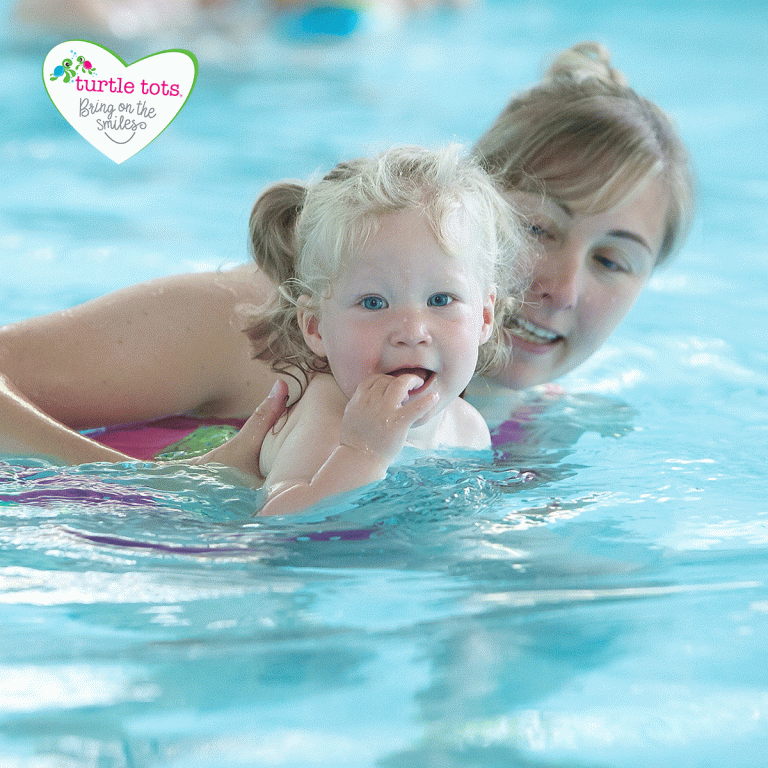
Between 18 months and 3 years, swimming progress often shows up in small, surprising ways. A longer kick. A calmer grip. A moment where they try something new without being coaxed.
This guide explains how swimming milestones in toddlers usually build, what good toddler-level swimming lessons look like, and how we help little ones progress towards independence in a way that stays calm, playful and child-led.
And of course, no article about toddlers would be complete without some tips for managing those typical toddler challenges!
What toddler swimming progression looks like
In toddler swimming, progression isn’t a straight line. It tends to go more like this: two steps forward, one step sideways, a splash, a giggle, then a week where they want to watch the lesson from the comfort of your arms!
And that’s all a totally normal part of toddler swimming progression.
That’s why a good toddler swimming programme is flexible, child-centred and focused on the following:
- Confidence first – making sure your child feels safe, settled and willing to try.
- Gentle skills that unlock independence – body position, breathing, coordinated movement.
- Safety routines woven throughout – not tacked on at the end.
The goal should never be to rush children towards ‘independent swimming’. It’s to build strong foundations and confidence, so independence happens naturally, in your toddler’s own time.
Moving from baby to toddler classes: what changes?
Baby swimming lessons are about familiarity, bonding and early water experiences with lots of physical support.
Toddler swimming lessons build on all of that, but the emphasis shifts. Toddlers are stronger, more coordinated and more aware of what’s happening around them. They’re also more likely to want choices and control (sound familiar?).
In toddler swimming lessons, you’ll often see:
- More active, varied activities to match their high energy and short attention spans.
- Clearer skill development, with the emphasis on learning through having fun.
- More opportunities for your child to initiate movement.
- Consistent songs, games and routines that help your child feel secure and comfortable in the pool.
Swimming milestones for toddlers: 18-months to 3-years
Every child is different, but there are some common building blocks that underpin most toddler swimming development.
18–24 months: confidence, comfort and first technique foundations
At this stage, many toddlers are working on:
- Staying calm and happy in the pool environment
- Moving with support (kicks, reaches, turns)
- Early floating positions with support
- Playful tolerance of water in their face (splashes, bubbles, gentle pours)
- Beginning aquatic breathing habits through games
- Short moments of letting go, reaching, or moving towards you
2–3 years: stronger movement, breathing and early independence
As strength and coordination improve, you may start noticing:
- More purposeful kicking and arm movements
- Improved balance and body awareness
- Better breath control (especially learning to exhale in water, then lift to breathe)
- Growing familiarity with safety routines and boundaries
- Greater distance from you as they become more confident in their abilities
The path to independent swimming (without the pressure)
Many parents are keen to know when their child will be able to swim on their own.
The honest answer is: it varies. Independence depends on things like confidence, temperament, physical development and, importantly, how regularly they swim.
With early exposure and steady lessons, many children can swim short distances independently by around three-and-a-half.
But that doesn’t mean every child will, and it’s important to celebrate all the little wins on each individual child’s path to independent swimming. Reaching for the wall on their own. Trying a kick without being prompted. Choosing to blow bubbles, then lifting their head to breathe. These little moments are exactly what we look for in toddler lessons, because they’re signs that your child is starting to trust their body in the water. We celebrate these wins quietly and consistently, boosting confidence as we go, so their independence grows naturally over time.
Common toddler swimming challenges
Toddlers will be toddlers! If you’re finding that your swimming sessions feel unpredictable from week to week, you’re not alone. Here are some of the most common challenges that come with toddler swimming, and our top tips for handling them:
Sudden resistence or reluctance
Many toddlers go through phases of caution or clinginess, often linked to developmental leaps. When it comes to swimming, this can show up as phases where a child who was happily swimming suddenly wants extra reassurance, resists familiar activities, or prefers to stay close.
A strong lesson structure helps here, because familiar routines make new or challenging moments feel less overwhelming for little ones. Consistency matters too, even on the wobbly weeks. If your child needs to start by watching or staying close, that still counts – it keeps the routine familiar and the pool feeling safe. With calm repetition, most toddlers rejoin in their own time.
Hesitation with putting their face in the water
This is very common, and the key is not to push. Having the confidence to put their face in the water is something that builds gradually through seeing you put your own face in, bubble games, splashing play, gentle pours and lots of repetition – always guided by your child’s readiness.
Wanting to do everything their own way
Also completely normal! This is where child-centred learning really matters. Offering them as much choice as possible, within clear safety boundaries, helps your toddler feel a sense of control, while keeping them safe and supported in the water.
But of course, sometimes even the best-laid plan gets taken down when a toddler is struggling with big feelings and becomes emotionally dysregulated. A calm, experienced teacher will support you both with patience and attuned responses. And then when your child is ready, using clear routines, gentle prompts and age-appropriate choices to steer things back into the activity, so your child can feel in charge within safe limits.
And if it starts to feel like a battle, it’s absolutely fine to take a breather at the side of the pool and try again next week. Keeping the experience calm and familiar is progress, too.
Toddler swimming lessons with Turtle Tots (18 months to 3 years)
Turtle Tots toddler lessons are designed as the natural next step from baby swimming, helping your child build on their early foundations and progress steadily towards independent swimming, always with the emphasis on zero pressure and plenty of fun.
Our lessons are led by trained Turtle Tots teachers who understand toddler development and use a calm, child-centred approach that prioritises safety and confidence. We follow clear safeguarding practices, and sessions are structured around familiar routines, close supervision and age-appropriate support in the water.
You’ll see your little one’s strength and confidence grow as our lessons help them develop:
- Water confidence
- Early stroke technique
- Balance and coordination in the water
- Aquatic breathing (learning to exhale, then surface to breathe)
- Water safety
- Supported submersion when ready
You can explore the full Turtle Tots journey here, from baby swimming (birth to 18 months), through to toddler levels and finally on to our pre-school sessions.
Submersion and underwater swimming
At Turtle Tots, going underwater isn’t the main goal of our toddler swimming lessons.
We do include natural submersion in our sessions, but the timing will differ for each child, and our teachers are fully trained to understand when the right time is. Your child always has full control over whether they swim underwater, and the majority of our activities take place above the water through games, movement, and breathing activities that build skills without forcing anything.
Why we use songs and games
In toddler lessons, play isn’t a break from learning – it’s how learning happens! Songs and games help little ones practise movements without pressure, repeat skills naturally, build balance and coordination, and stay engaged long enough for it to start sticking. And when they’re enjoying themselves, they’re far more likely to come back happily next week, feeling ready to try again.
Still have questions about toddler swimming?
Here are the answers to the questions we are asked most frequently by our customer when thinking about their toddler swimming lessons. If you need more help and advice, contact your local team who will be more than happy to help.
Q. What swimming skills should my 18-month-old have developed?
At 18 months, the most important ‘skills’ are comfort, routine and willingness. Many toddlers are practising supported kicks, reaches, early floating positions, simple listening cues, and playful breathing games – with confidence-building as the priority.
Q. How do I know when my toddler is ready to move from baby to toddler swimming classes?
It’s usually somewhere between 15 and 18 months, but it’s less about a perfect moment and more about the right stage. If your child is more mobile, curious, and eager to explore, toddler classes are often the best fit, especially when the lesson structure includes plenty of physical support and predictable routines.
Q. How long does it take for toddlers to become independent in the water?
There isn’t a set timeline. It depends on confidence, ability and how regularly they swim. With early lessons and consistent practice, many children can swim short distances independently by around 3.5 years, but it’s important to remember that it’s not a fixed schedule.
Q. What are the key swimming milestones for toddlers aged 18 months to 3 years?
Common milestones include increased comfort in the pool, stronger kicking and reaching, improved floating with support, early breath control (exhaling in water), growing tolerance of putting their face in the water, and short moments of more independent movement.
Q. How can I support my toddler’s swimming development at home?
Keep it simple and pressure-free. Bath-time bubble play, gentle face splashes, positive talk about swimming, and regular pool visits all help reinforce familiarity and confidence. You can also repeat some of the songs and games you learn in your lessons, increasing your little one’s familiarity with the activities they’ll experience at the pool.
Q. What’s the difference between water confidence and swimming independence?
These terms often get used interchangeably, but they’re not the same. Water confidence is about how your toddler feels in the pool: they’re safe and settled, willing to have a go (even if they hesitate at first), able to cope with small changes, and they bounce back more quickly after a wobble.
Swimming independence builds on that confidence: your toddler initiates movement more often, relies less on constant physical support, begins linking skills together (like moving, exhaling, then surfacing to breathe), and starts making simple, safer choices in the water. In short, confidence is the foundation, and independence grows from there.
Q. How do you handle a toddler who is afraid of putting their face in the water?
By not forcing it. A good programme uses adult modelling, games, repetition and child-led cues to gradually build comfort. Face confidence often grows in small, steady steps.
Take the next step with Turtle Tots toddler lessons
If you want a toddler-swimming programme that builds confidence first, then steadily develops the skills that lead to independence – all through play, routine and strong safety foundations –Turtle Tots toddler lessons are designed for exactly that.
Find your nearest lessons here


