
It’s time to get ready: how to prepare for babies first swimming lesson
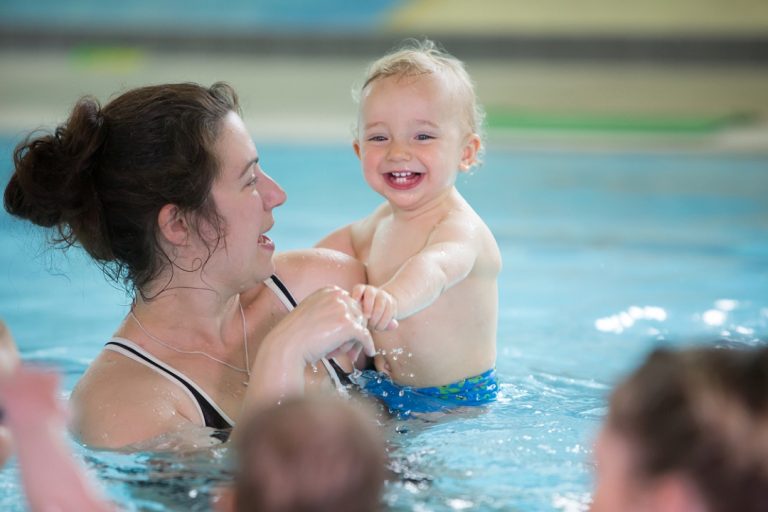
Getting ready for your little one’s first swimming lessons? A little preparation can go a long way to helping that first splash feel easy and enjoyable for you both!
To help you get started, we’ve pulled together our top tips to help you and your baby feel prepared – both before you head to the pool and while you’re there.
Here’s our complete guide to getting ready at home, knowing exactly what to expect in class, packing the right kit and breezing through the changing rooms.
Preparing baby for swimming with calm, happy bath times
Nurturing a love of bath time is one of the best things you can do to prepare your baby for their first swimming lessons.
Having been snuggled in the womb for nine months, your little one already has a natural affinity with the water! But there are a lot of new sights, sounds and smells that come with being in the water earthside – and it can all be a bit overwhelming for them.
Helping your baby feel comfortable and relaxed not only means that bath time itself will be easier and more fun for you both, but also that they’ll be more likely to adapt well to a pool setting when the time comes.
How to bath your baby safely
We know that handling a wet and slippery baby can be a bit daunting at first – especially if you’re a new parent. Here are some tips to keep bath time safe and stress-free:
- Keep the water shallow (about 20–30cm) and make sure the temperature of the water is between 37–38 °C. Ideally, use a bath thermometer to check.
- Mix the water well and test it with your elbow. It should feel comfortably warm against your skin, with no hot patches.
- Before you start, gather everything you’ll need and have it close at hand. Typically, you’ll want a soft cloth, a snuggly towel and any bath products you want to use.
- Place a non-slip mat on the floor for you to kneel on while lifting and supporting your baby.
- And of course, it goes without saying that you must never leave your baby unattended in the bath, even for a second.
- Build baby’s water confidence in the bath. Once your baby is in the bath, you can start using some techniques that will help them grow in confidence and feel safe and secure in the water.
- Gently massaging their legs and arms is a great way to help keep your little one relaxed.
- Have some baby-friendly toys on hand to play with in the water. From colourful pouring cups to toys that light up or make a sound, toys can provide a good distraction and help your baby create positive and happy associations with being in the water.
- Lightly splash the water with your hand to get baby used to the noise and sensation of splashing. You can build up the intensity of the splashing as your baby gets accustomed to it.
- Introduce gentle face-wetting. If babies get used to this sensation early on in life they are far less likely to develop an aversion to it later on. Begin by gently tricking water over the back of your baby’s head, then gradually let the water come further forward so that it runs down the sides of their face and near their ears. Watch your baby’s reactions carefully to see how they react to this. If they seem comfortable you can let the water run gently over their face. If at any time your baby seems uncomfortable with the sensation then move the water further back again.
- Throughout bath time, maintain eye contact with your baby and keep reassuring them with words and songs – they will be comforted by your voice.
- Watch their cues, and if their reaction to anything you’re doing is to cry or fuss, don’t worry. Simply pause, give them a cuddle and try again next bath time.
- Bath time = bonding time. If you’re able to get into the water with your baby, sharing a bath provides a wonderful skin-to-skin bonding experience. Here’s how to do it safely and comfortably while helping your baby get used to being in the water:
- Sit in the bath with your knees up, holding your baby close and facing you.
- Lay them on their back against your legs and gently splash their tummy, letting them get used to the temperature and sensation of the water.
- You can also lie back and pop baby on your chest with their body submerged so they can feel the water over their whole body – this can also help keep them warmer for longer.
- Once you start your baby swimming lessons, you’ll also be able to use these precious bath times to practice some of the floating holds you’ll learn at your Turtle Tots baby swimming lessons!
What to expect in your first swimming lesson
If you’ve never attended a baby swim lesson before, it can be helpful to give yourself an idea of what to expect once you’re both in the pool.
At a Turtle Tots Baby Swimming lesson, you (or another adult) will go into the water with your baby. Our specialist teachers will guide you as you learn supportive holds, safe entries to the water, gentle floating and water-confidence skills – all set to songs and games to keep it fun!
Typical ratios in our classes are up to 10 adult-and-child pairs per teacher.
Want to see a lesson in action? Check on this video to see what a typical Turtle Tots baby swimming lesson looks like.
Ready to jump in?
Great! But don’t head to the pool without checking out our Changing Room Survival Guide – it’s your essential checklist of what to bring baby swimming and top tips to make sure your swimming lesson goes smoothly.
Read through it below, then download and print off a copy to stick on the fridge as a handy reminder before each lesson!
Baby Swimming: The Changing Room Survival Guide
Things to pack for your baby’s swimming lesson
Trust us, being well-equipped and prepared will make the experience much more pleasurable! Here are the things we recommend having with you at every lesson:
- Swim nappy + neoprene outer: most swim schools operate with a ‘double nappy’ rule, i.e. a disposable or reusable swim nappy with a snug neoprene outer layer to help prevent leaks. We recommend that you come prepared with two complete sets – one for the lesson and one as a backup. (Many parents have been caught short in a Code Brown situation before they’ve even got into the water!)
- Baby swimming costume: any comfortable swimwear is fine, but a neoprene swimsuit or thermal wetsuit can help your little one stay warmer in the pool for longer.
- Towels: one for baby, one for you. A hooded or poncho-style towel is helpful for keeping your baby warm and drying their hair faster. A changing-robe towel can also be a good idea for you, so you can go hands-free if needed without the risk of losing your towel!
- Baby hair/body wash and moisturiser: it’s important to rinse the chlorinated water off your baby’s skin as soon as possible after your lesson with clean, warm water. A mild, baby-safe body wash can help, followed by a gentle moisturiser – particularly if your baby has sensitive skin or eczema.
- Dry clothes for you both: think loose-fitting clothing that’s easy to get on when you’re a bit damp. This is not the time to be style-conscious!
- Flip-flops or other non-slip footwear: for you to wear poolside and in the showers.
- Hair tie if your hair is long.
- Coin or token for the locker
- Snacks and drinks: depending on your baby’s age, this might include milk, water and/or a snack. Swimming is hungry and thirsty work for your baby – and don’t forget something for you to eat and drink too!
- A water-safe toy: bringing a familiar toy from home – especially to your first lesson – can really ease your baby’s transition to the pool.
Baby swimming dos and don’ts
Do:
- Bringing another adult to your lesson can give you a very useful extra pair of hands! But don’t worry if that’s not an option – you’ve got this!
- Arrive 10–15 minutes before your lesson, if possible, to give yourself plenty of time to get changed.
- Dress both you and your baby in loose-fitting clothes that are easy to take off. Babygros are ideal attire for your little one.
- If you’re coming alone, it can save a lot of time and effort if you arrive with your swimsuit under your clothes.
- If not already provided, ask the venue or the swim school about a travel cot or playpen in the changing room. Being able to put your baby down somewhere dry can make things a whole lot easier while you get dressed.
- Most pools don’t allow prams/buggies poolside, but there’s usually a buggy park. Check your venue’s information before you go and plan accordingly.
- Make sure the pool temperature is right for your baby’s age and if they are under
3 months/5.5 kg (12 lbs) the water should be at least 32°C.
- Keep your baby’s towel poolside (ideally hang it up to keep it dry) so you can wrap them up as soon as they’re out of the water.
- Use a bag that keeps your things organised. Reusable zip-top bags are handy for keeping everything separate, so you’re not rummaging around with one hand and wrestling a wriggly baby with the other!
- Bring something along to distract your baby while you’re getting them dressed – a favourite toy or book is ideal.
Don’t:
- Don’t leave your baby unattended in or near water, even for a moment.
- Don’t ignore the double-nappy policy. It’s essential for hygiene and everyone’s safety, and you won’t be allowed into the water unless your baby is wearing both layers.
- Don’t give your baby a big feed immediately before swimming. A smaller feed 30–60 minutes before your lesson is ideal.
- Don’t worry if your baby needs a cuddle or a break during their lesson. It’s normal. Your teacher will help you read their cues and you can try again when they’re settled.
Looking for more information?
Here are the answers to some of the questions most frequently asked by our customers when it comes to preparing for their first swimming lesson at Turtle Tots. But if you find that you still have questions, don’t worry. Simply contact your local team, they will be more than happy to help.
Q. How many swim nappies do I need for one lesson?
Until your child is fully toilet-trained, a double-nappy system is the industry standard for baby swimming. It’s the most practical and hygienic way to prevent little accidents in the pool.
A double nappy system consists of an outer neoprene nappy and a reusable or disposable inner nappy. We recommend you bring two complete sets to your baby swimming lesson.
We sell Happy Nappies, DUOs, Costumes Wetsuits and reusable under nappies in lovely colours and designs in our online shop
Q. Should I feed my baby before or after lessons?
It’s sensible to avoid a big feed immediately before a swim. Give your baby a small feed or snack around an hour before your lesson, then a more substantial feed after your class.
Q. What type of swimming costume is best for baby boys and girls?
Apart from the all-important double nappy, there are no rules for what your little one wears for their baby swimming lesson, and there is no difference between swimsuits for baby boys and girls. Any comfy baby costume is fine, but a neoprene swimsuit or an insulated all-in-one can help keep them warmer in the water.
Need some guidance? We’ve done the shopping around for you! Visit the Turtle Tots shop to find a brilliant range of swim nappies and swimsuits.
Q. How do I keep my baby warm after getting out?
Keep a hooded towel at the poolside and wrap up your little one as soon as you lift them out of the water. Rinse off their skin in fresh, warm water, then dress them in layers of clothing appropriate to the time of year. A hat can help them retain heat if it’s cold outside.
Q. Can I bring a pram or pushchair to the poolside?
Most venues prohibit prams or buggies at the poolside or in the changing areas to preserve hygiene and space, but most offer dedicated areas for parking – often in the reception or foyer area. It’s always best to check your venue’s information before you go.
Q. What should I do if my baby cries during their first lesson?
The main thing is not to panic – crying is a normal reaction for babies, and it’s usually nothing to be worried about. Simply pause, cuddle your baby and rejoin your lesson once they’re settled. It takes time to build confidence in the water, and experienced baby swimming teachers are very used to hearing crying babies! They will offer support and guidance to help you read your baby’s cues.
Q. Can grandparents or other family members take my baby instead of me?
Yes! Any responsible adult can accompany your baby into the water, and this can actually be a lovely bonding experience for extended family members. Check with your swim school if you’re unsure.
That’s it – you’re all set for your baby’s first swimming lessons!
We’d love to be part of your splashy adventures! When you’re ready, choose the Turtle Tots class that best suits your family, and we’ll be there to welcome you into the pool.
Find Turtle Tots lessons near you.


