
Nervous about baby swimming lessons?
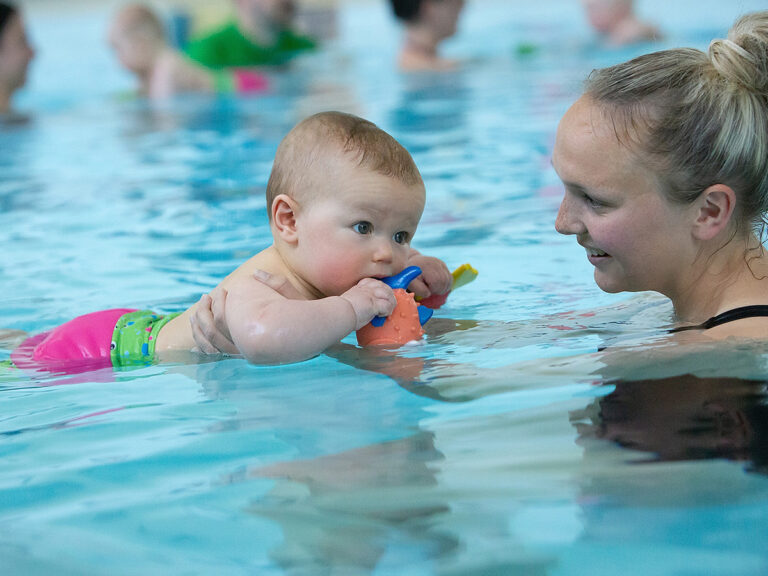
For many families, the idea of baby swimming lessons brings up a feeling they weren’t quite expecting: nervousness. Sometimes they are nervous about their baby or toddler crying during lessons. Or nervous about having their baby or toddler having the correct swim nappy. The reasons can be many.
If that sounds familiar, you’re in good company. And it doesn’t mean swimming isn’t right for your family. In most cases, it simply means finding the right lesson, with the right support tailored to your child’s age and stage.
When it’s the parent who feels nervous
Lots of parents who come to Turtle Tots lessons carry some anxiety about water themselves. For many, it’s actually part of why they come to us – they want to make sure their own child grows up feeling comfortable and confident around water, in a way they perhaps didn’t.
What’s worth knowing is that you don’t need to be a confident swimmer to bring your baby to lessons. What matters far more is your presence, your calm, and your willingness to follow your teacher’s lead. Skin-to-skin contact, eye contact and a reassuring smile aren’t just nice moments, they’re how babies build trust and confidence in the water.
If water feels daunting for you, you’re not expected to manage that on your own – your Turtle Tots teacher is trained to recognise it and support you through it. In 2020, we became the first UK-wide baby swim school to have teachers trained to support adults with a fear of water, through a partnership with the Aquaphobia Learning Programme (ALP). This gives us the skills and understanding to help parents build confidence in a safe, supported environment.
When it’s your child who feels unsure
For young babies, the pool is a new environment with sounds and sensations they’ve never experienced before. Some take to it quickly, while others need a little more time to process it all. Both are completely normal.
For toddlers and older children, hesitation can come from a range of places: a previous experience that felt uncomfortable, a developmental stage where they’re more aware of their surroundings, or simply the fact that they have learned how to say a firm ‘NO’! You might see this as clinginess, resistance at the poolside, or tears.
None of these responses means your child can’t swim or won’t enjoy it. They’re just communicating what they need and our teachers are trained to understand this communication and listen to it.
Is it normal for babies to cry at swimming lessons?
Yes – totally normal. Crying is one of the main ways babies and young children communicate that something feels unfamiliar or a lot to take in.
What matters most is how that moment is handled. Staying calm, keeping your baby close, following their cues – these things help them feel safe. Over time, that sense of safety becomes familiarity, and familiarity is what leads to confidence.
It’s also worth knowing that at Turtle Tots, we never push through tears (or any other communication that tells us your baby might not be enjoying something). If your baby is unsettled, the activity pauses or is adapted. We take our lead from your baby, not from a lesson plan.
Why the right approach makes all the difference
A child who feels nervous in the pool doesn’t need encouragement to be braver. They need an environment that makes bravery unnecessary – where everything is introduced gradually, where their cues are read and respected, and where support is built into the structure of every lesson.
That’s what a genuinely child-centred approach looks like in practice. It isn’t just a phrase. It means activities are never forced, progress isn’t measured against a fixed timeline, and parents stay in the water throughout, offering the physical reassurance their child needs to feel safe enough to explore.
How Turtle Tots supports nervous children and parents
Our teachers are trained in both swimming instruction and child development, and they support parents as well as children – recognising that the two are closely connected. If you feel calmer, your child usually does too.
Lessons are structured to build familiarity week by week, with consistent songs, routines and cues that help babies and toddlers know what to expect.
If you or your child has a more significant fear around water, our partnership with the Aquaphobia Learning Programme means your teacher has the skills and empathy to work with you to help you build confidence.
What progress actually looks like
Progress doesn’t always arrive as big smiles and splashes! For a nervous child, early progress in the water can look like:
- Staying in the pool for the full session for the first time
- Relaxing their grip slightly
- Watching other children rather than looking away
- Joining in for just a moment before retreating to you
These are real steps. They’re worth noticing and celebrating – even if they don’t look like much from the outside.
There isn’t a fixed timeline for water confidence. Some children settle within a few weeks, and others take longer. What matters is that they feel safe, that trust is building, and that progress is allowed to happen at their own pace.
What about older children who suddenly become nervous?
It’s not unusual for a child who has previously been comfortable in the pool to go through a phase of anxiety – sometimes quite suddenly. As children get older, they begin to understand risk differently, and that can make the water feel more daunting for a while.
The most helpful response is to acknowledge what they’re feeling, resist the urge to push through it, and take a gradual, supported approach. With the right environment, confidence can be rebuilt at any age.
FAQs
Why is my child scared of swimming lessons and what can I do about it?
Children can feel anxious for many reasons – an unfamiliar environment, a previous experience that felt uncomfortable, or simply a developmental stage where new things feel more daunting. The most effective approach is a calm, gradual introduction in a lesson designed for their age and stage, with plenty of reassurance built in and a teacher who takes their cues seriously.
Is it normal for my baby to cry during swimming lessons?
Yes, it’s very common. Crying is a natural way for babies to communicate that something feels unfamiliar or overwhelming. With consistent, gentle support, most babies become more comfortable over time – and those early tears are often replaced with curiosity and enjoyment.
How do Turtle Tots teachers help anxious children feel comfortable in the water?
Our teachers are trained to recognise signs of anxiety and respond with empathy, adapting activities in the moment and supporting both child and parent throughout the lesson.
Should I stop swimming lessons if my toddler is upset every session?
Not necessarily. Small signs of progress often come before visible enjoyment – staying in the pool a little longer, relaxing their hold on you, watching rather than resisting. If your child is being supported in the right way, it’s usually worth giving it time. If you’re unsure, speak to your teacher.
How can I prepare my child for their first swimming lesson to reduce anxiety?
Keep things simple and positive. Talk about what will happen, use bath time as a gentle introduction to water, and avoid putting pressure on the experience. Arriving with plenty of time helps, too. A rushed start can make everything feel harder.
What is the child-centred approach and how does it help nervous swimmers?
A child-centred approach means following your child’s cues, introducing activities gradually, and never progressing faster than they’re comfortable with. For a nervous child, it means the lesson adapts to them – not the other way around.
How long does it take for an anxious child to enjoy swimming lessons?
It varies. Some children settle within a few weeks; others take longer. It’s not about waiting until they’re ‘ready’, it’s about providing the right environment and support for their stage and allowing confidence to grow at its own pace.
Can parents stay in the water with their child during lessons?
Yes. Parents are in the water throughout our baby, toddler and preschool swimming lessons, providing physical reassurance and helping your child feel secure. You’re never on the sidelines.
What should I do if my preschooler suddenly becomes scared of swimming?
Acknowledge what they’re feeling – don’t dismiss it or push through it. Take a gradual approach, keep things calm and familiar, and speak to your teacher about what you’re noticing. With the right support, confidence can be rebuilt.
How do smaller lesson sizes help children who are nervous about swimming?
Smaller lesson mean more individual attention – for your child and for you. Teachers can respond more closely to each child’s cues, and the environment tends to feel calmer and less overwhelming, which makes a real difference for a nervous swimmer.
If you’re feeling unsure, that’s completely normal. With the right support, both you and your child can grow in confidence in the water.
Ready to find the right lesson for your child’s age and stage?
Explore our lessons and find a lesson near you.
Learn more about our approach and values.
Get in touch if you’d like to talk things through.


